Mom in My Old Coat
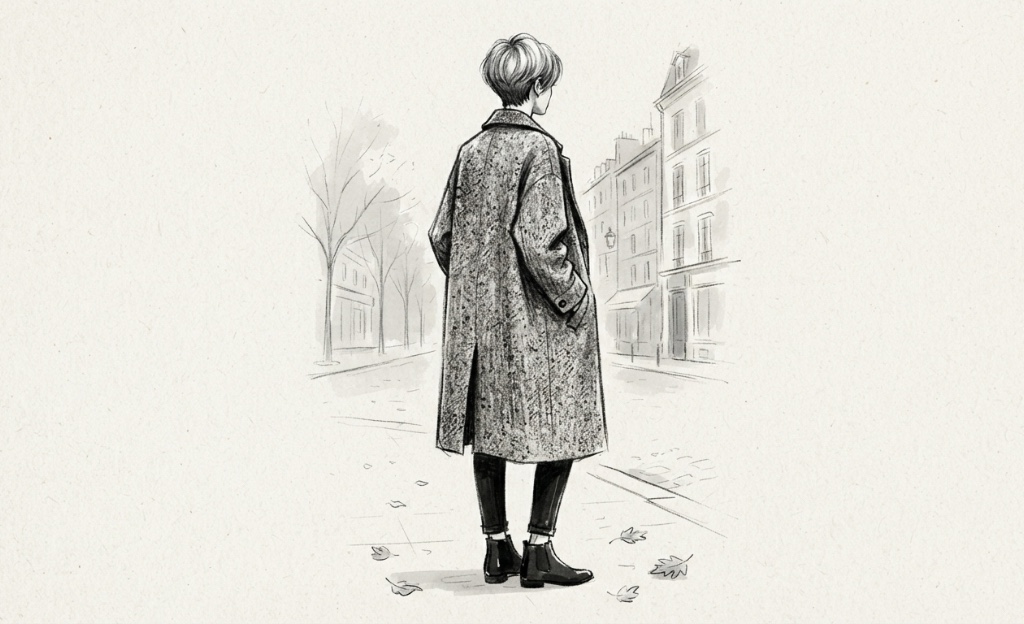
When I entered the building, she was standing by the mailboxes. She was wearing my old spring coat and the old garrison cap I used to wear when I worked in a store as a student. Thin, with a gaunt face.
-
Mom?
-
Who are you?
I had already turned to leave so as not to upset her. Then she asked, “Olya?”
How I Lost Her
As far as I know, my mother never drank alcohol or used drugs. Yet somehow she developed a mental disorder. She also had serious problems with her eyesight, and in 2013 I applied for guardianship. Her mother and sister were against it. They convinced everyone around them that I couldn't be trusted and that I wanted her apartment. Although under the law, even when someone is placed under guardianship, no one has the right to take away their apartment, so there was no logic to their behavior. According to the second psychiatric evaluation, my mother did not need assistance. Her sister said the same thing in court: my mother didn't need help.
What followed was daily harassment by relatives and their acquaintances. I was seriously ill. I barely remember even the court proceedings concerning my mother. My cat died in agony, for no visible reason. When false accusations became the only thing I heard from my mother, I left everything behind and went away. I needed to “put my own oxygen mask on first” — to help myself before I could think about helping my mother.
Despite my poor health, I studied on Coursera. I applied for financial aid because of my difficult life situation, and the platform approved it. After completing some courses, I was able to find my first job as a developer.
My profession gave me the opportunity to work on interesting projects and meet interesting people. Simferopol, Kyiv, Austin.
In Austin, I became the victim of a crime. In 2023, the Austin police closed my case, stating that I allegedly suffered from persecutory delusions. In the details of the Austin incident, I described how everyone merrily joined in telling me to see a psychologist and diagnosed me with schizophrenia right there in a local city chat while I was trying to find witnesses. That is how a line I never wrote found its way into my biography. No longer feeling safe, I was forced to return to Crimea.
After my return, I began having strange dreams and experienced a severe flashback. Trying to understand what was happening to me, I learned about PTSD and wrote an article, PTSD: When the Dragon Doesn't Scare. It is about what PTSD is, how easily the system can confuse PTSD with schizophrenia, and how this prevents victims from finding justice and preserving their lives and health. While I was trying to understand these strange experiences, savage neighbors repeatedly broke down my doors. In 2025, I placed my phone in the damaged door and recorded a Simferopol police officer telling the neighbors who had attacked me that he hadn't documented the damage. What goes unrecorded might as well never have happened. And a report of an attack that can't be corroborated can easily be dismissed as a persecutory delusion, often resulting in a psychiatric diagnosis later — that very same schizophrenia — and a loss of credibility as a victim.
I had planned to return so I could help my mother, but in reality I came back in almost the same helpless state in which I had left. I couldn't find the strength to go and see her. Eventually, I did.
She was retired and should have been receiving her pension, but what I saw told me only one thing: she was in trouble and apparently had not been receiving her money. The apartment smelled of sewage, the refrigerators and gas stove had been disconnected, there was no food at all, and there were streaks running down the walls of the bathroom and toilet. My mother couldn't correctly state her own apartment number. She had no passport. She said that someone was stealing her food and money, that her sister had visited the day before, and that a woman claiming to be me had come to see her, bringing along her “daughter” — that is, my mother's granddaughter.
I have no children. I have never been pregnant (or so I thought; now, after working through my flashbacks, I am no longer sure of anything).
I went to the shop and bought canned food, milk, sausage, and bread rolls.
In 2013, because of my relatives' testimony, I was denied guardianship. I saw the outcome of their “victory” with my own eyes and described it in a post titled The Price of One Victory.
Then my mother was gone. Her sister, Liudmyla Maiboroda — the very person who had prevented me from becoming her guardian — turned up just after her death (or perhaps at the time of it). She buried her without telling me anything. She didn't tell me she had buried my mother even when she passed me on a narrow sidewalk, looking me in the face.
I learned of my mother's death only after I began searching hospitals and morgues. At her home, I found documents that told me she had been living through hell until the final months of her life. A police response dated October 8, 2025, stated that her account hadn't been corroborated. I don't know the context of her complaint. A little later, on November 18, 2025, a description of the injuries she had sustained after a beating was drawn up. That was the same night I heard screams near my home: the people who had been breaking down my doors beat my mother, who had come to Simferopol for some reason.
I still don't know where her grave is.
What I Know for Certain
I know the condition I found her in when I visited in May. That condition is evidence that her sister, having prevented me from becoming my mother's guardian, did nothing to help her. I don't believe in her good intentions. I don't know what her motive was.
A disconnected stove. Streaks on the walls. An empty fridge. A missing passport. My coat on her. All of this can be seen and verified. This is the result of her sister's care. What exactly she cared about remains unclear. My mother's condition deteriorated as I was pushed out of her life. Close together in time doesn't mean one caused the other. Or it does mean that, but those who did this to us won't admit it.
She was beaten at least once.
My mother was hospitalized on July 9, 2026, “with bleeding.” She died on July 19, 2026. The documents I managed to obtain list "malignant neoplasm of the bile duct" and "hepatorenal syndrome."
What Direct Memory Leaves Untold
At some point, I decided to record my flashbacks and created a public account for that purpose. Flashbacks don't come out of nowhere. There must be a reason for them, and I didn't understand the reason for my condition, so I decided to keep a journal to analyze what was happening.
Many flashbacks seem to contain explanations of what has been happening to me and my life all this time. For example, one flashback contains the phrase "This bitch won't live to see her pension! If she comes in — prescribe her statins." Statins are drugs that lower cholesterol in the blood. I really did have high cholesterol recorded in about 2017. There is no visible reason for it, because I had a normal weight and led an active lifestyle. This flashback seems to explain that my high cholesterol has a cause — not in my lifestyle, but in the fact that, apparently, I was subjected to torture or poisoning.
High cholesterol isn't all of it. In 2017, I became seriously ill: anemia, lymphadenopathy, leukopenia, lymphocytosis, elevated ALT and AST, and high cholesterol. All of this was accompanied by breathlessness and tachycardia. My speech became short and fragmented; I couldn't explain a simple problem. Around the same time, I dreamed several times — or so I thought — about my neighbor Lena Zhurba, her son and husband, and one of my former tenants in my apartment. The dreams were very realistic: I would wake up, see one of them, and fall asleep again. Only later, working through the situation, did I realize that these were most likely not dreams.
In 2024 and 2025, my door was repeatedly broken down while the police did nothing and deliberately covered up for those who did it — Zhurba and Sotnikov, my neighbors, took part in it — and this wasn't a dream, it was partly caught on camera. On the night of November 17–18, 2025, I heard women's screams. I assumed it might be my mother being beaten, but I had no proof until I found documents at her home after she died describing the injuries she sustained in the beating. It is worth noting that she didn't remember the beating herself either — I asked her while she was alive if she had been beaten, and she said no. Raw video of a police officer telling a neighbor that he didn't document the damage is on YouTube.
And here's what that adds up to: my mother died on July 19, 2026 — right in the period when my flashbacks were particularly vivid. At the same time — on July 19, 2026 — I found marks on my body: an abrasion on my knuckle, whose origin I don't remember, and round, regularly shaped bruises on my body. I recorded my findings in the same journal as I found them. At the time, I wrote that these marks couldn't have appeared naturally because I hadn't been hiking, and that the bruises had a distinctive appearance: round, regularly shaped, identical in size, and similar to those left after the attack in Austin. Quite a coincidence, isn't it?
My flashbacks include ones like:
- Torture
- Interrogation in a Place Resembling an Apartment in Kyiv. The people conducting the interrogation said they would put me through the schizophrenia protocol if I got worse. To be fair, this was neither my first nor my last flashback involving an interrogation.
- There Are Traces of Polonium. What Have You Dragged Us Into?
- You Will Die of Cancer Soon. What Do You Need an Apartment For?
- Maybe Electroshock, So She Forgets?
- I Also Had a Flashback in Which My Father Was Tortured. (Block 2) My mother's sister dropped a camera and struck my father in the head with an axe, and he fell into a pit dug nearby (like a grave).
A Flashback Is Not an Official Record
The context of flashbacks can change depending on the conditions in which the trauma happens, but the very fact of a flashback is an important point.
Working on my flashbacks allowed me to rethink the health problems that doctors couldn't — or wouldn't — explain. It also allowed me to find a suspected vulnerability in my home (a window) through which attackers could have entered. The fact that I don't remember how the abrasion on my knuckle and the round, distinctive bruises on my body appeared tells me I have amnesia, and since I don't use drugs or alcohol and don't lead a risky lifestyle, I think the cause of the amnesia is that some substances were used on me without my consent. When there are too many coincidences, they stop looking like coincidences. That is precisely why I think my flashbacks have an external cause.
Having a separate account for my journal allowed me to record the dates of my flashbacks and keep them apart from my "normal" biography — the one I know — rather than mixing it with what "surfaced" as a result of this whole situation. That is the right approach. No one can guarantee that the facts described in flashbacks are accurate. Judgments at such moments are based on sensations that arise during the experience. And sensations can be manipulated by those who target a person for attack. That doesn't negate the fact that at least some of them describe real events and that they all point to some kind of catastrophe unfolding in the life of the person they fall on.
That is precisely why I think my mother most likely faced the same attacks as I did. Did we get in someone's way?
What I Didn't Know
My mother and I weren't close, but we lived together, shared a household, and I was the first person she took her frustration out on. Living conditions were difficult, and I was busy surviving. From childhood, she often told me that I had to rely only on myself. I had to work for next to nothing to afford the bare essentials. I could see that she often lost heart, but I never had the chance to understand what was happening to her health.
Informational materials intended to support the families of patients like her advise against arguing with them. I didn't know that traumatic memories could be misinterpreted as psychotic symptoms. I didn't know that simply not arguing might not be enough. Understanding trauma, how it breaks a person, and how the system allows that to happen takes time and energy, and I was struggling to survive myself. I learned more about trauma only after I began looking into my own situation in 2025.
I don't know why my mother's health deteriorated. I know only her diagnoses. But after becoming the victim of an attack in Austin and learning about PTSD, I realized that the condition she was treated for was most likely not the one she should have been diagnosed with. One of my flashbacks led me to the same conclusion.
What a Criminal Leaves a Victim With
A criminal leaves a victim with very little. Health problems. Anxiety. Strange sensations. Other people's distrust. A ready-made psychiatric diagnosis. A premature death.
This is not my discovery.
The East German Stasi practiced what was known as Zersetzung — “decomposition.” Break-ins in which nothing was stolen, but traces of someone else's presence were left behind. Forged letters. Rumors. Overt surveillance. The aim was to confuse the victim, make them doubt their own reality, break them, and drive them into mental disorder. The writer Jürgen Fuchs, who described these methods, was declared paranoid by the East German authorities. Then the archives were opened, and everything he had written about was confirmed.
There are many ways to break a person and undermine their credibility. Many such methods lead to the person receiving a psychiatric diagnosis. What makes the Stasi's methods unique is that they have been officially documented and acknowledged by history.
Substances that induce amnesia can make the situation worse. Not only is the person unaware that they have become the victim of a crime, but according to trauma researchers, such substances don't erase the traces of trauma in the body and mind. The victim lives with unexplained anxiety, nighttime awakenings, memory gaps, and flashbacks that become more distressing over time. The target of an attack becomes a victim two or three times over: during the attack itself and afterward, when faced with the consequences of trauma.
The Trap of Official Records
You cite authoritative sources to explain why her words can't be trusted. Yet ignoring victims has never solved their problems. Ignoring them has never punished criminals.
You cite authoritative sources to explain why she doesn't need help. An expert opinion, a signature, a stamp. But no expert opinion ever fed her or switched her refrigerator back on.
You cite authoritative sources to explain why nothing happened. An official report, a certificate, a closed case. But the person writing the report is the one who decides what goes into it. When the police fail to document damage and medical professionals fail to recognize trauma in the context of the problem, the victim is left to face it alone.
You cite authoritative sources to explain why the matter is closed. “Not corroborated,” “not established,” “no grounds.” But “not corroborated” doesn't mean “didn't happen.”
I am a woman who neither uses drugs nor drinks alcohol, and I have been attacked in two very different countries. These attacks have much in common: an assault on someone asleep in their own home involving substances that induce amnesia, multiple small, identically sized, perfectly round bruises, and flashbacks. Yet the system responded routinely: persecutory delusions, damage not documented... I have effectively already lost my health, yet the circumstances in which the harm was inflicted have never been established, and the question of holding those responsible to account remains unanswered.
I managed to make some recordings that may substantiate my account of the attacks and reveal inconsistencies in police conduct. But people are generally unprepared for this. They simply don't even know that flashbacks and delusional experiences are different things, both clinically and procedurally:
- A PTSD flashback may potentially contain information about an actual traumatic event. Such information may be taken into consideration during an investigation and provide grounds for examining the circumstances, locating witnesses, and searching for physical evidence.
- A delusional experience, by contrast, is not considered a reliable recollection of an external event solely on the basis of the person's subjective conviction. Formally, a person experiencing delusions can still give testimony, but in practice, their accounts are often disregarded even by medical professionals.
And because potential victims don't know this, they themselves are unprepared to challenge empty official records.
Expressing humanity in informational materials and citing authoritative conclusions is not the same as exercising professional judgment and getting to the bottom of a situation.
Mercy for Those Who Need It More
The word “mercy” sounds comforting and noble. Like a triumph of justice and humanism. We often hear about mercy toward criminals. About their right to a second chance, forgiveness, and a return to normal life. Far less often do we hear about what is left for those whose lives have been destroyed by the actions of others.
Victims are advised to forgive, to let go, not to air their dirty laundry in public, to go to church, and to move on. Even when they have nowhere to return to and nothing to rebuild. Even when they have lost their health, their jobs, and their loved ones. Even when they have no strength left to go on living.
Mercy must not mean impunity. Forgiveness must not replace investigation. And the humanity of a society is measured not only by how it treats the accused and the convicted, but also by what it does for those who have suffered. In this world where everything has been turned upside down, does anyone still remember what it means to treat victims humanely?
My mother needed help. She needed food, medical care, safe living conditions, and someone who could look after her. Instead, arguments erupted around her over whether she really needed help at all.
A psychiatric evaluation was able to declare her capable of living independently. Her relatives were able to claim that she didn't need help. But no expert opinion was able to fill her empty fridge, switch her disconnected stove back on, or provide her with decent living conditions. Nor did those very relatives.
The woman standing by the mailboxes in my old coat didn't need another explanation of why she was perfectly fine.
She needed help.
My father went missing in the late 1990s or early 2000s. Things were so hard for us that I didn't even have time to process it back then. As far as I know, he was never found. Or maybe I just don't know anything about it. I had a few flashbacks this summer, but I can't rely on them alone when it comes to this.
He needed help.
I needed help when I became the victim of a crime in Austin. I exhausted all my resources moving to America, adapting to life there, and putting myself in a position to help both myself and my mother. I had to leave to save my life. And the person who stole my personal data, broke into my apartment, drugged me without my consent, and launched a campaign against me still lives there and has probably obtained a passport by now.
Mercy is not an inexhaustible resource. When given to the criminal, it is taken away from the victim: the right to be heard, the right to protection, and the right to have a crime called a crime. And society as a whole is deprived of its right to safe and healthy living conditions.
Kindness shown where justice is needed solves nothing. It teaches the criminal that they can carry on. And it teaches traumatized people that their pain is worth nothing. The response to evil must be punishment. Punishing the guilty is also an act of mercy. Toward potential victims.